
Solutions · Core Business
SYSCOHADA Books Written by the Work Itself
Sales, purchases, stock, payroll and cash become accounting entries as they happen, under rules your accountant controls, so today’s result is on screen and every figure opens to its document.
Why the Books Need a System
Your Books Tell the True Story of the Business
Accounting turns every sale, purchase, payment and payslip into figures the owner, the bank and the tax office can trust. Re-keyed months later, the books tell an old story, and no figure leads back to its document.
The SERVO Way
How a Figure Reaches Your Statements
The work writes the entries; your accountant sets the rules and closes the period.
- 01DocumentEvery DepartmentAn invoice, bill, payment or payslip, signed and numbered
- 02Draft EntryAutomaticWritten by your rules, marked Provisional
- 03To ClassifyAccountantA line with no account waits here, never the sale
- 04PostingAccountantNumbered without gaps, then frozen
- 05ReconciliationAccountantBank and Mobile Money matched line by line
- 06StatementsManagementEvery figure opens to its entry and its document
Year EndA checklist walks you through the count, the cut-off and period 13, and SERVO drafts the closing entries.
The Journal Entry
Every Figure Opens Its Document
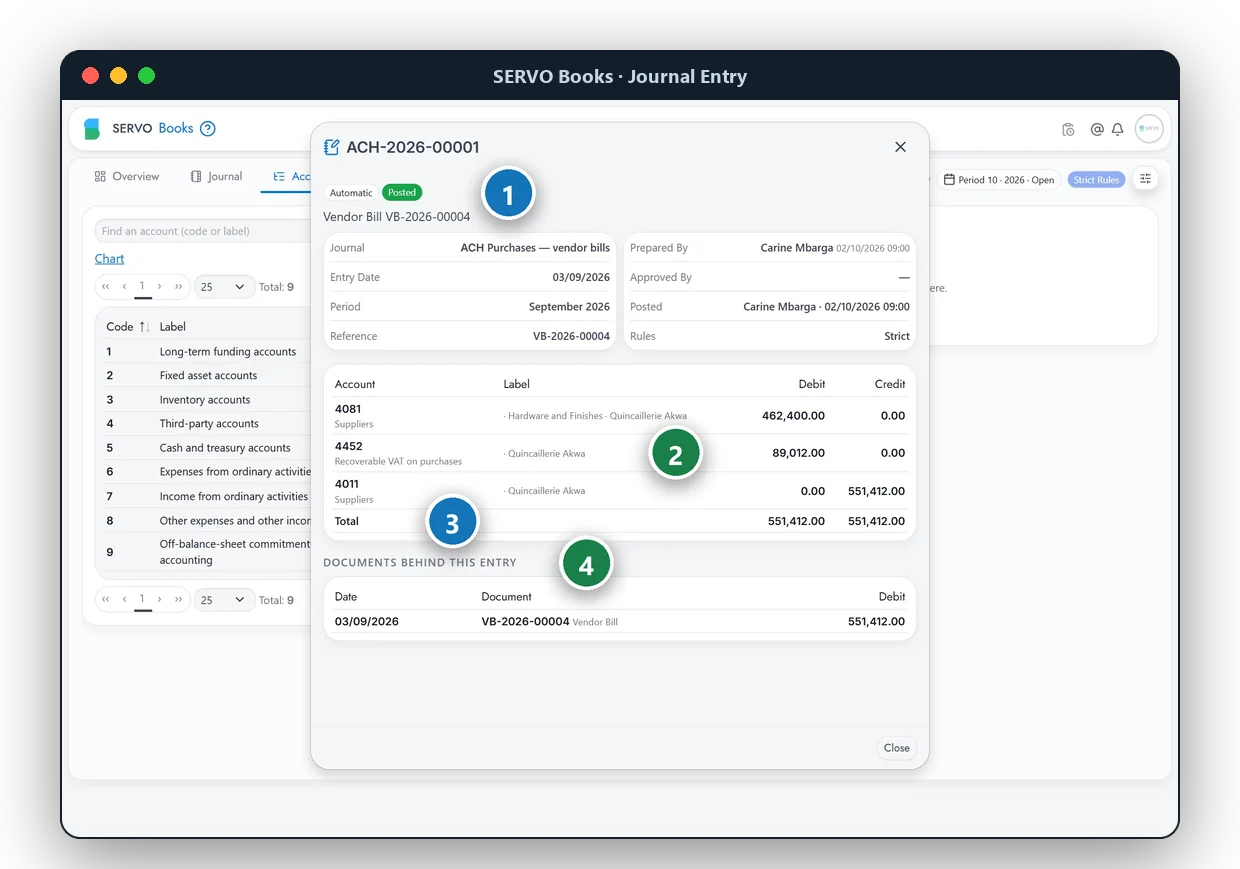
Entries are written from the documents themselves, and any figure leads back to the bill or invoice behind it.
Point and Click
- 1
Written From the Documents
Post Up To a date turns approved documents into numbered entries, journal by journal.
- 2
Lines That Say Who and Where
Each line carries the supplier or customer and the department.
- 3
Always Balanced
Debit equals credit, under the posting rules your accountant chose.
- 4
The Document Behind Every Entry
One click from the entry to the bill, invoice or payment that made it.
Speed
Nothing is keyed twice: the day’s entries come from the day’s documents, and a document changed after posting is booked again by Check for Changes.
The Challenge
Chief financial officers we have worked with tell us:
“Our books arrive three months late, re-keyed from sales and purchases that never quite agree with operations. When the auditor asks for the document behind a figure, someone loses a week finding it, and nobody can tell us this month’s result.”
Where SERVO Stands Apart
Where most ledgers wait for someone to re-key the month, SERVO’s books are written by the work, and every posted figure traces to a signed document and the rule that wrote it.
Live, Not Re-Keyed
The Month on Screen, Every Day
No Re-Keying, Ever
Invoices, receptions, bills, payments, stock moves and payroll are read straight from the work and turned into entries. Your accounting is live at any moment, marked Provisional until posted.
The Revised SYSCOHADA Chart, in French and English
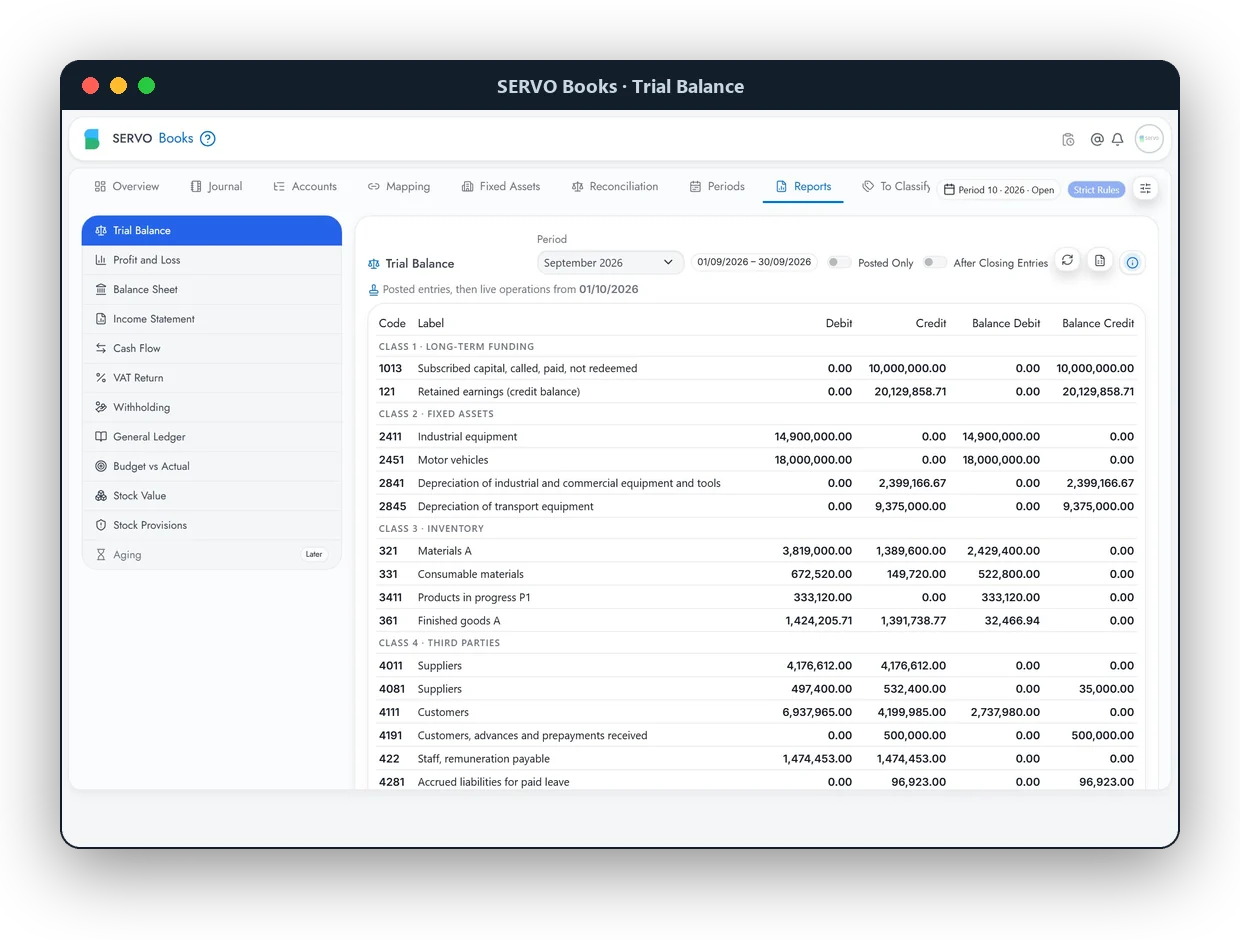
The 2017 revised chart ships complete, 1,418 accounts in both languages. Statements carry their official codes: the bilan, the compte de résultat and the cash flow table (TFT).
To Classify, Never a Blocked Sale
A line SERVO cannot map to an account waits in To Classify and holds back posting, never the sale at the counter. Fix the cause once and every line it held moves together.
Stock Value That Ties to the Books, Exactly
Each stock movement is booked at the value it changes, at weighted average cost (CUMP) or FIFO by batch. The stock accounts equal quantity times cost exactly, so any difference is real.
Bank and Mobile Money Reconciled Line by Line
Import the bank or mobile money statement, match each line to what SERVO recorded and explain the rest. Cash differences are charged to the named collector, never lost in a suspense account.
Books an Auditor Trusts
Closed Means Closed
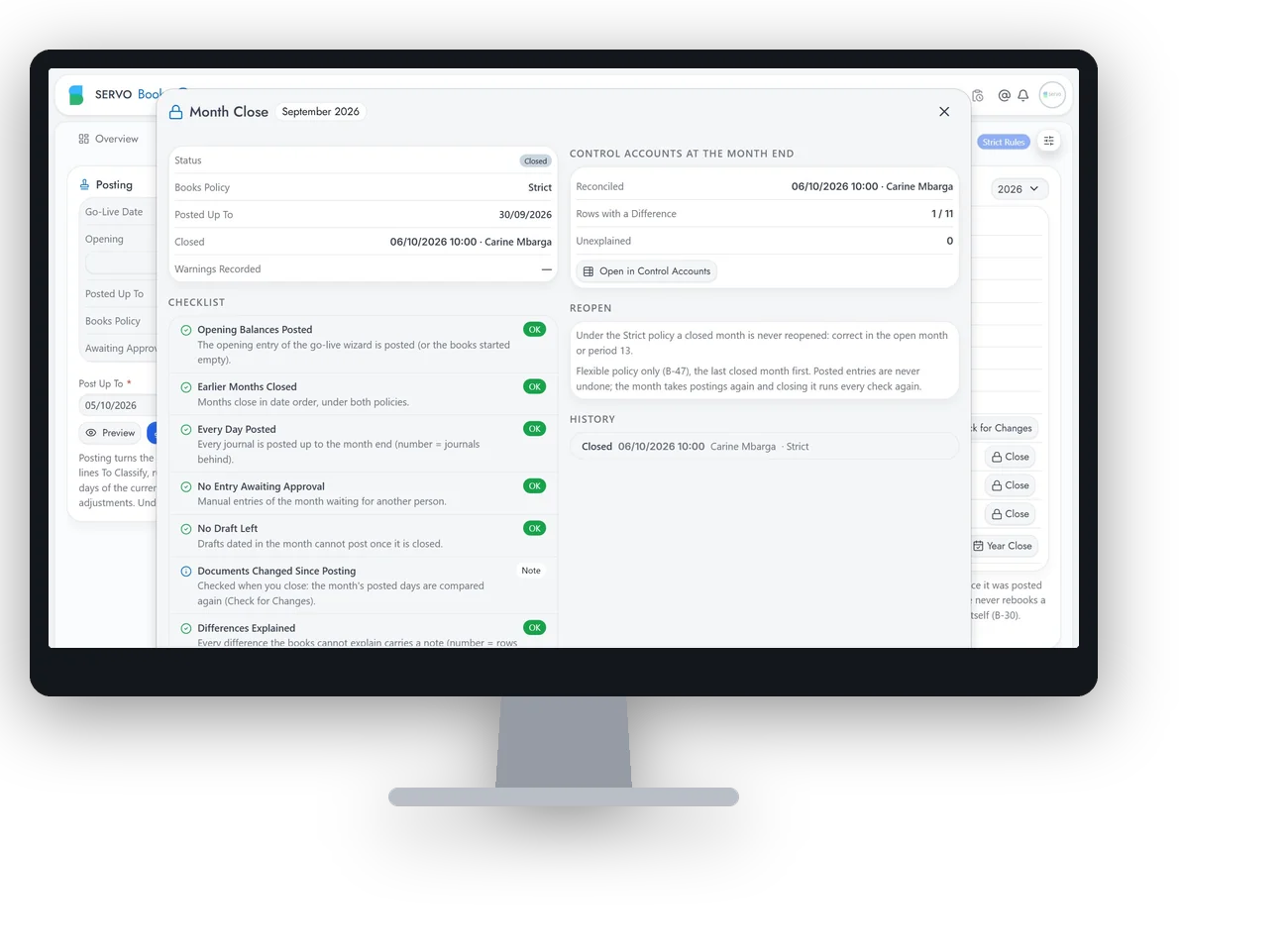
Posted Entries Are Frozen
Entries are numbered only when posted, without gaps, per journal and per year. If a document changes after posting, SERVO reverses it in the open month and leaves the closed month as it was.
Strict or Flexible, Your Choice per Year
Strict suits the tax office and the audit: one cut-off, months never reopen. Flexible turns the same rules into warnings; in both, every entry balances and every report states the policy in force.
Every Figure Opens to Its Document
Click a balance and reach the entry, the rule that wrote it and the invoice or payment behind it. Large manual entries need a second person, and the auditor reads it all in read-only mode.
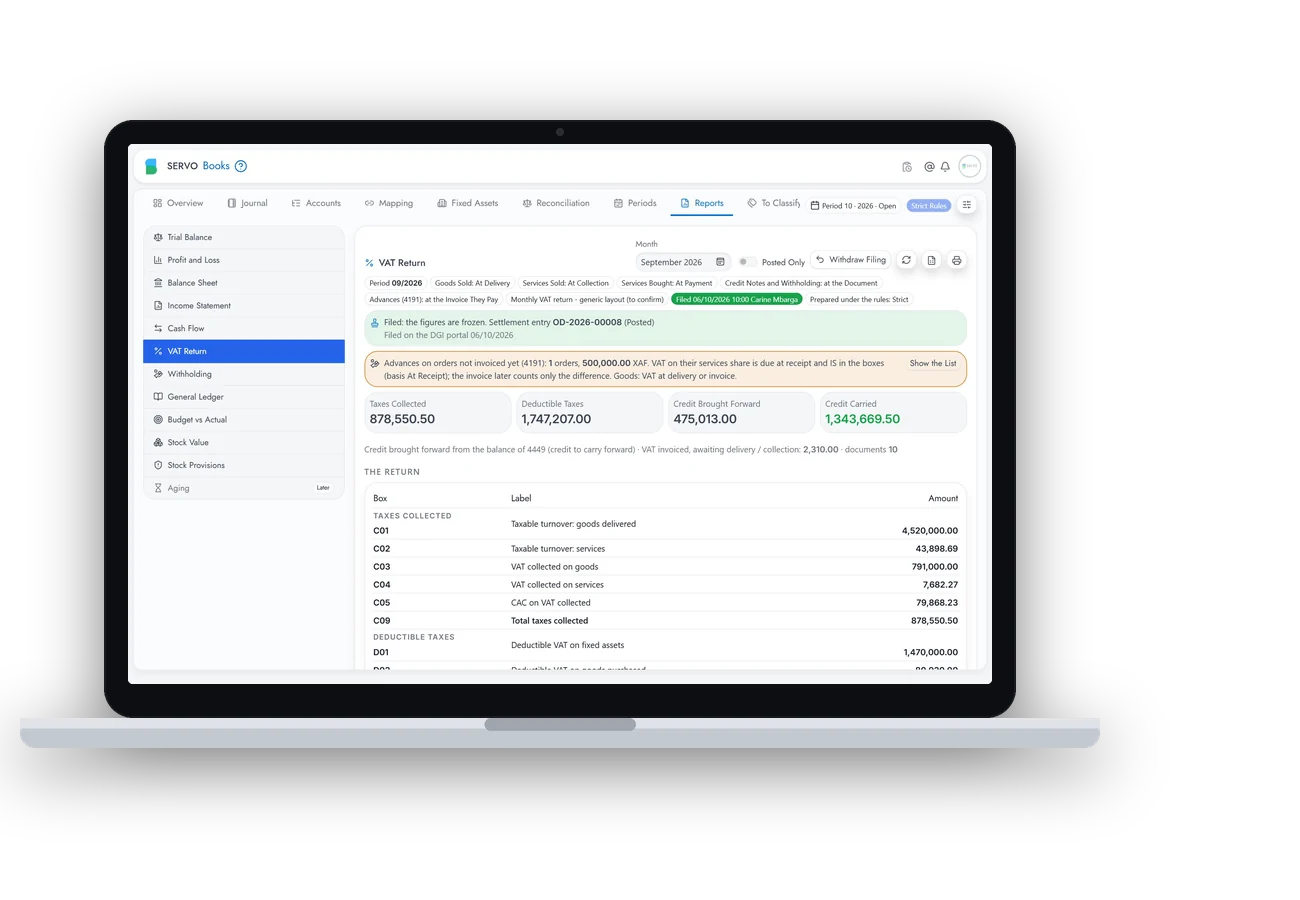
VAT Returns That Never Move After Filing
VAT and the CAC are calculated per document, with chargeability by nature. A filed return is frozen; a late document lands in the next return as an adjustment.
A Year Close That Drafts Its Own Entries
A checklist walks you through period 13, the year-end count and the cut-off entries, which SERVO drafts. Closing and opening entries post together, with checks that they agree.
One System
Works Hand in Hand With
- Procurement, Budgets and ExpensesPurchase requests and orders, budgets, and every expense approved and traced
- SalesB2B sales, invoicing and payments · point of sale, cash registers and tills · customer accounts
- Reporting and Business IntelligenceSales, purchases, spending, stock, customers, projects and the books, in reports that agree.
From First Meeting to Go-Live
How We Bring It In
- We Listen and MapYour process as it really runs, on site, with the people who run it.
- We Shape SERVO to Your RulesApprovals, controls, documents and accounts set to your organisation.
- We Train Every RoleEach person on the screens they use, in French or English.
- We Stay Beside YouOn site at go-live, and a call away long after it.
Book Your Free 1-Hour Meeting
Tell us how this part of your business runs today and where you want it to go. Our consulting team will set a time that suits you.