
Solutions · Specialised Modules
Every Vehicle, Driver, Litre and Kilometre Accounted For
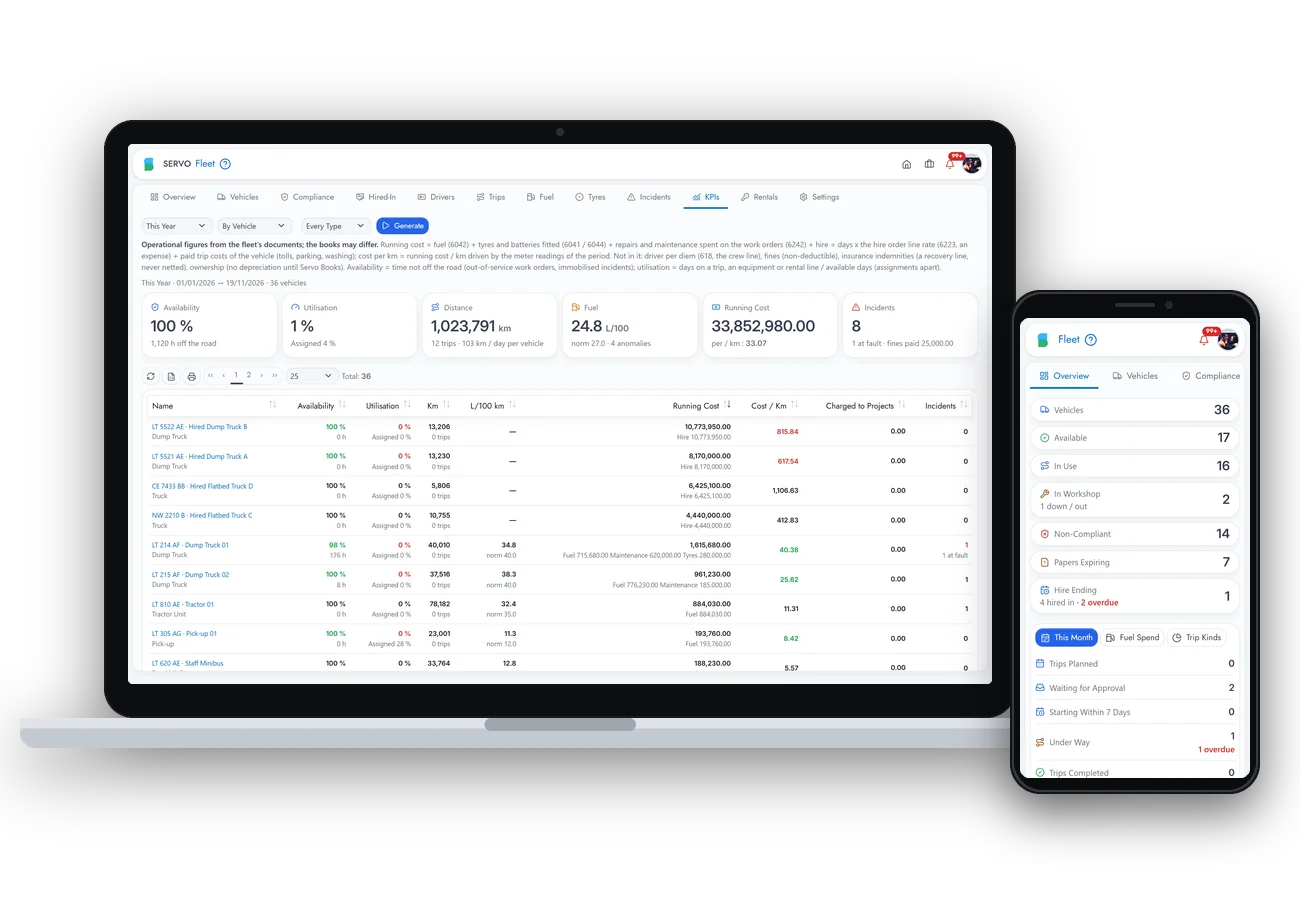
Approved trips signed out and back with the odometer, fuel checked against each vehicle’s norm, papers flagged before they lapse, and the true cost per kilometre of every truck.
Why a Fleet Needs a System
Every Kilometre Is Money on the Road
Fuel, drivers, repairs and papers make vehicles one of the costliest things a company runs. Without a signed record of every trip and every litre, the true cost of each truck stays a guess.
The SERVO Way
How a Trip Runs in SERVO
Every trip an approved mission, signed out and signed back.
- 01MissionDispatcherOne vehicle, one driver, a route, approved first
- 02Hand-OverDriverOdometer, walk-round and papers checked, PIN signed
- 03On the RoadDriverCheck-ins and stops from the driver’s phone
- 04DeliveryReceiverEach stop received with a signature or a code
- 05FuelFleet ManagerLitres checked against the vehicle’s norm
- 06Cost per KmAutomaticFuel, repairs, tyres and hire per truck
Between TripsKilometres with no mission behind them show by vehicle and by driver.
Fleet KPIs
What Each Vehicle Really Costs
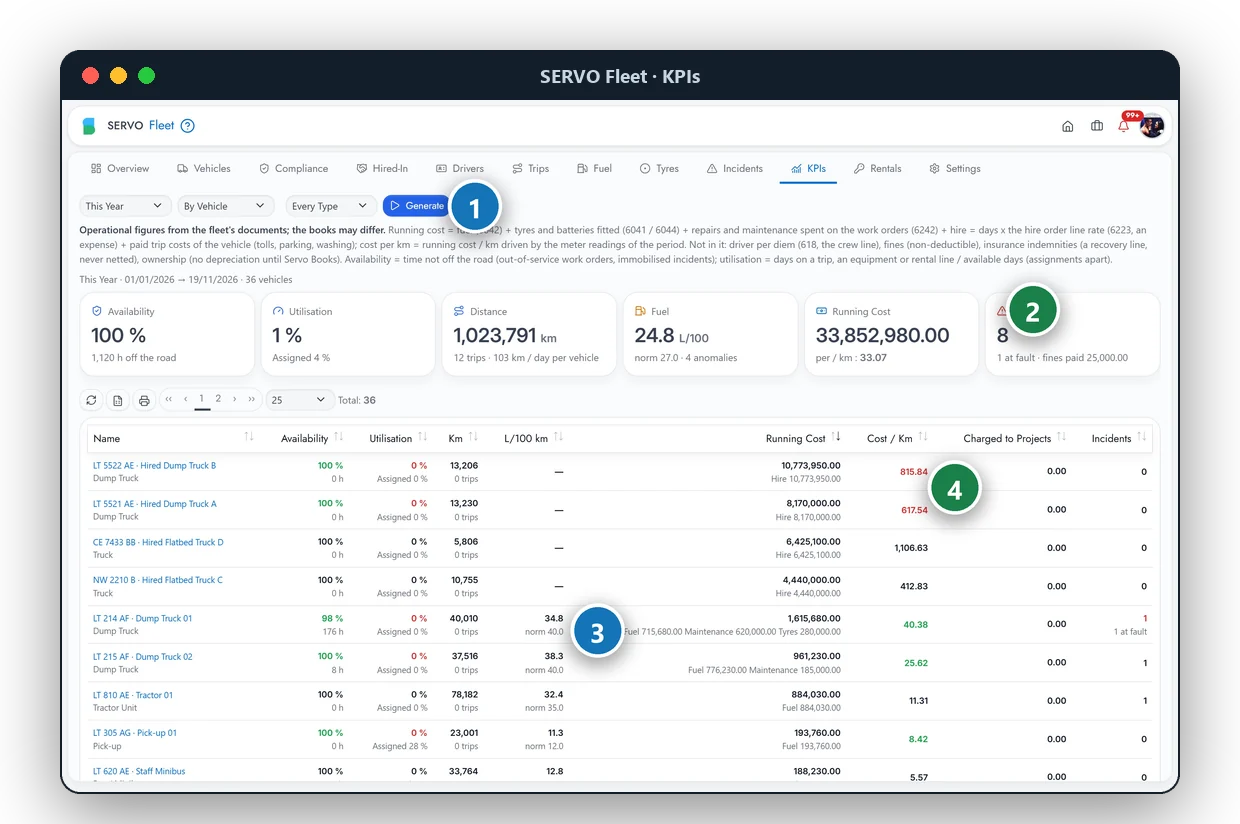
Pick a period and press Generate: every vehicle’s distance, fuel, availability and running cost, from its own records.
Point and Click
- 1
Figures on Demand
Worked out when you ask, for any period; nothing waits for a nightly job.
- 2
The Whole Fleet in One Row
Availability, use, distance, fuel against the norm and incidents, side by side.
- 3
Cost Broken Down
Fuel, maintenance, tyres and hire under each vehicle’s total.
- 4
Cost per Kilometre
The vehicle that costs too much per kilometre stands out at once.
Clarity
Running cost comes straight from the fuel, work orders, tyres, hire and trip costs recorded for each vehicle.
The Challenge
Transport and logistics directors we have worked with tell us:
“Fuel is our biggest cost after salaries, and we cannot prove how much of it went into the trucks. When a vehicle comes back dented, nobody was driving it; when one is stopped on the road, the insurance expired last week.”
Where SERVO Stands Apart
Every litre, kilometre and hand-over is checked at the moment it happens, not found at the month-end audit.
On the Road
Every Trip a Signed Mission
Every Trip an Approved Mission
A trip is a mission order (ordre de mission): one vehicle, one driver, a route, approved before it leaves. It starts and ends with a signed hand-over and the odometer.
Kilometres Nobody Can Explain
The odometer at the end of one trip is checked against the start of the next. Kilometres driven with no mission behind them show by vehicle and by driver.
The Driver’s Phone Does the Paperwork
Drivers accept a trip on their phone, photograph the odometer, walk round the vehicle against a checklist and sign with their PIN. Check-ins and voice notes reach the dispatcher with the phone’s position.
Deliveries Proved at the Door
When a vehicle leaves, its load list is frozen, and each stop is received with a signature or a four-digit code. A missing box stays in dispute, never quietly written off.
Incidents, Claims and Fines
The driver at the time of an accident comes from the custody log, not from memory. Claims are followed to payment, and a fine the company paid is charged back to the driver.
Fuel, Papers and Cost
The True Cost of Every Truck
Fuel Checked Against the Norm
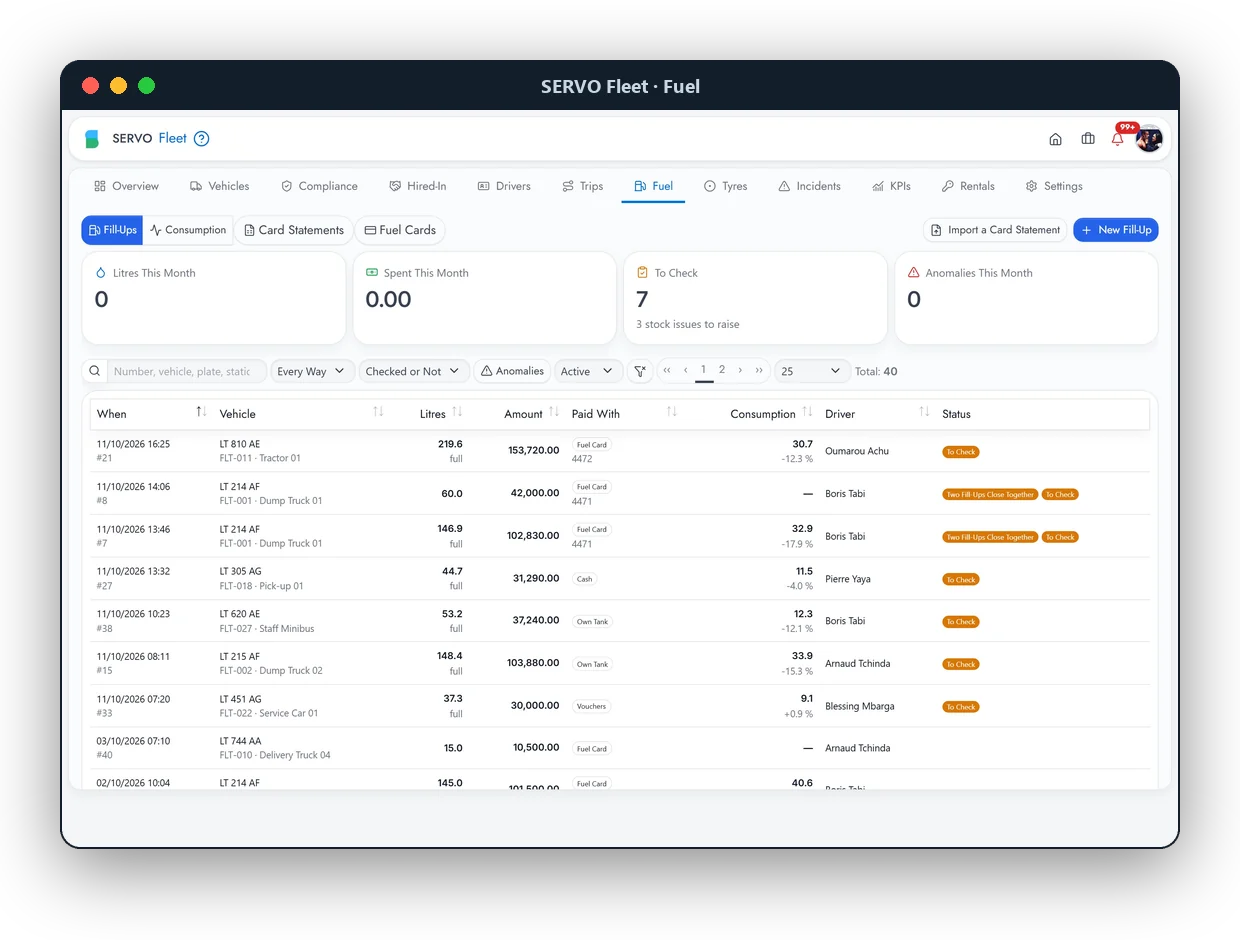
Consumption is measured tank to tank against the expected litres per 100 km for each vehicle type. Over 15 % is flagged, and so are litres above the tank’s size and two fill-ups within an hour.
Four Ways to Pay for Fuel
Cash, your own tank, vouchers and fuel cards each land in a document your accounts know. A card statement is matched line by line to the fill-ups and becomes the supplier’s bill, within budget.
Papers Checked at the Hand-Over
Licences, medicals, insurance, roadworthiness tests and permits are flagged before they lapse. At the hand-over an expired paper warns or blocks, as you choose.
Cost per Kilometre, Truck by Truck
Running cost per vehicle splits into fuel, repairs, tyres tracked by serial, hire and trip costs, with cost per km, availability, use and litres per 100 km against your targets.
Hired Trucks Run Like Your Own
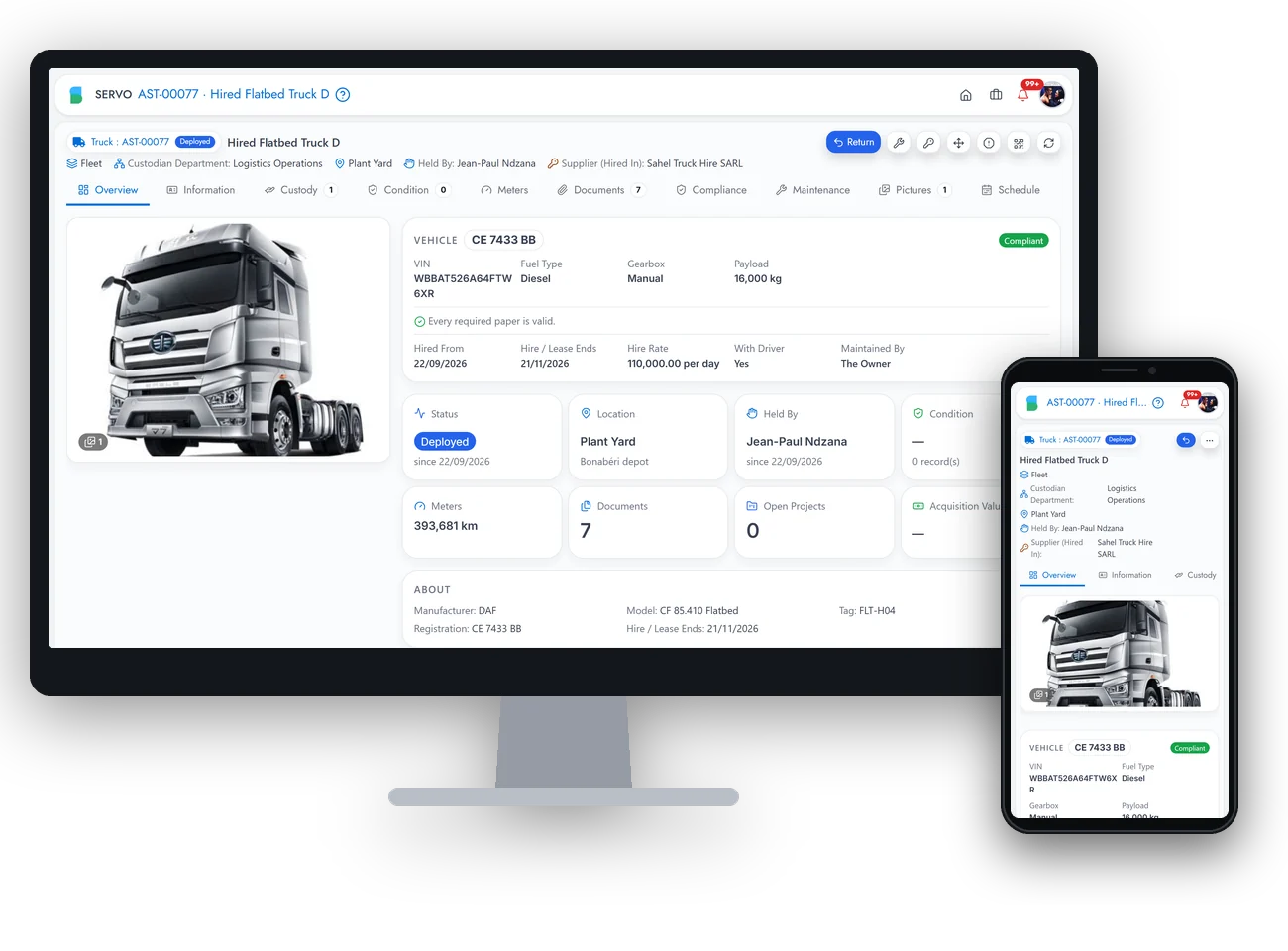
A hired truck carries its papers, trips and fuel like your own, without entering your fixed assets. Its cost is accrued day by day, and Hire Ending warns you before the contract runs out.
One System
Works Hand in Hand With
- Enterprise Asset ManagementEquipment, machinery, vehicles and IT, for any company whose money sits in them.
- Procurement, Budgets and ExpensesPurchase requests and orders for goods and services, budgets, and every expense approved and traced
- Financials and General LedgerSYSCOHADA accounts, journals, statements and the year close
From First Meeting to Go-Live
How We Bring It In
- We Listen and MapYour process as it really runs, on site, with the people who run it.
- We Shape SERVO to Your RulesApprovals, controls, documents and accounts set to your organisation.
- We Train Every RoleEach person on the screens they use, in French or English.
- We Stay Beside YouOn site at go-live, and a call away long after it.
Book Your Free 1-Hour Meeting
Tell us how this part of your business runs today and where you want it to go. Our consulting team will set a time that suits you.