
Solutions · Specialised Modules
Every Lot Known, From the Dock to the Customer
For goods that expire, get recalled or change with each delivery, SERVO follows each lot through reception, storage, transfer and sale, and prints it on every paper that moves it.
Why Lots Need a System
When Goods Expire, Every Lot Matters
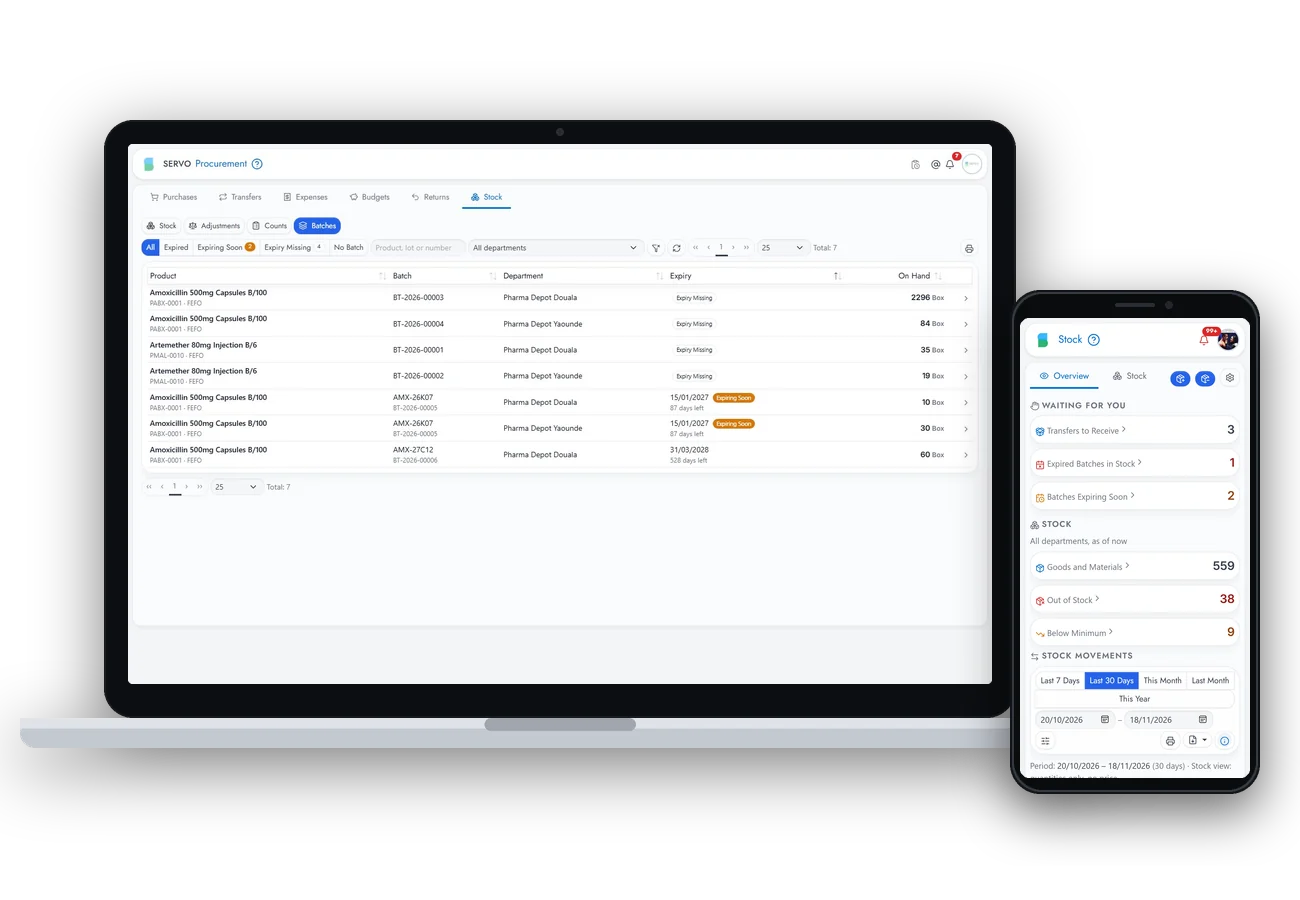
Medicines, food and chemicals change with each delivery, expire and are sometimes recalled. Knowing which lot sits where, and who received it, keeps expired stock off the counter and turns a recall into hours instead of days.
The SERVO Way
How a Lot Moves Through SERVO
Known from the first box at the dock to the customer who received it.
- 01Arrival NoticePurchasingThe warehouse knows what is coming, and when
- 02ReceptionReceiverLot, expiry and readings recorded per batch
- 03QuarantinePharmacistNew lots released only once checked
- 04PickingAutomaticFirst to expire leaves first, shelf life respected
- 05DispatchStorekeeperLot and expiry printed on every paper
- 06TraceQualityA recalled lot lists every customer who received it
Near ExpiryFlagged ahead, provisions calculated per batch, and a destruction needs its certificate.
The Lot Trace
Every Lot, Every Customer, One Click
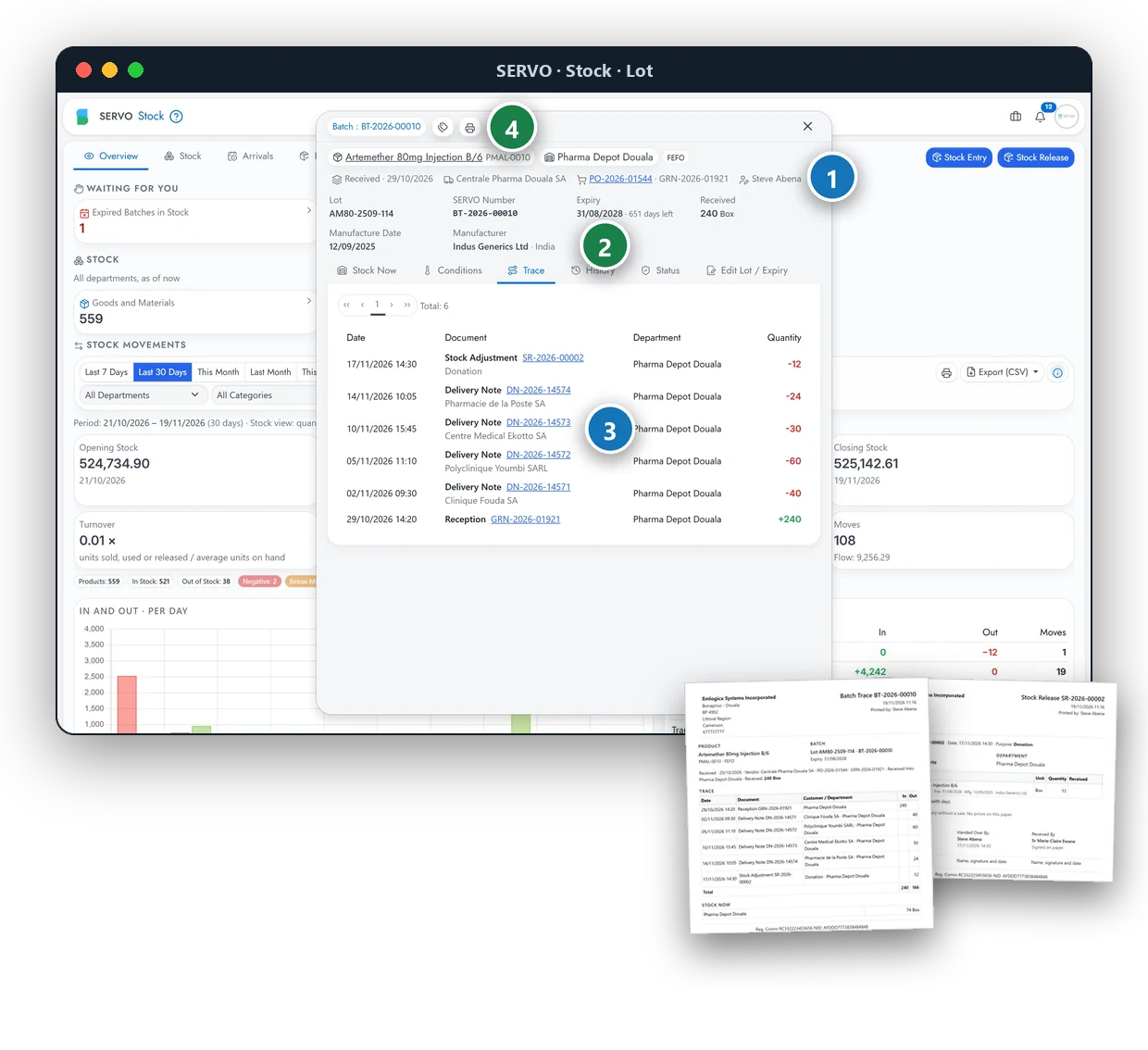
Each lot keeps where it came from and everywhere it went, so a recall names every customer at once.
Point and Click
- 1
Where It Came From
Supplier, order, goods received note, date and who received it.
- 2
Who Made It
Lot number, manufacture date, manufacturer and expiry with the days left.
- 3
Everywhere It Went
Every delivery note with its customer, and goods released without a sale.
- 4
The Recall Sheet in One Click
Every movement and the stock left, printed; a recalled lot is never picked for a sale.
Control
Goods released without a sale need a second person’s approval and a signature at hand-over, on a printed release note.
The Challenge
Pharma and food distributors we have worked with tell us:
“We hold medicines and food with expiry dates across several stores. We cannot say which lot went to which customer, expired boxes still reach the counter, and when a manufacturer recalls a batch we search through paper for days.”
Where SERVO Stands Apart
Lots, expiry, quarantine, recalls and shelf life are rules applied at the moment of picking and printed on every paper, not a field someone fills in after the fact.
At the Dock
Lots Known From the First Box
Lots Recorded at the Dock
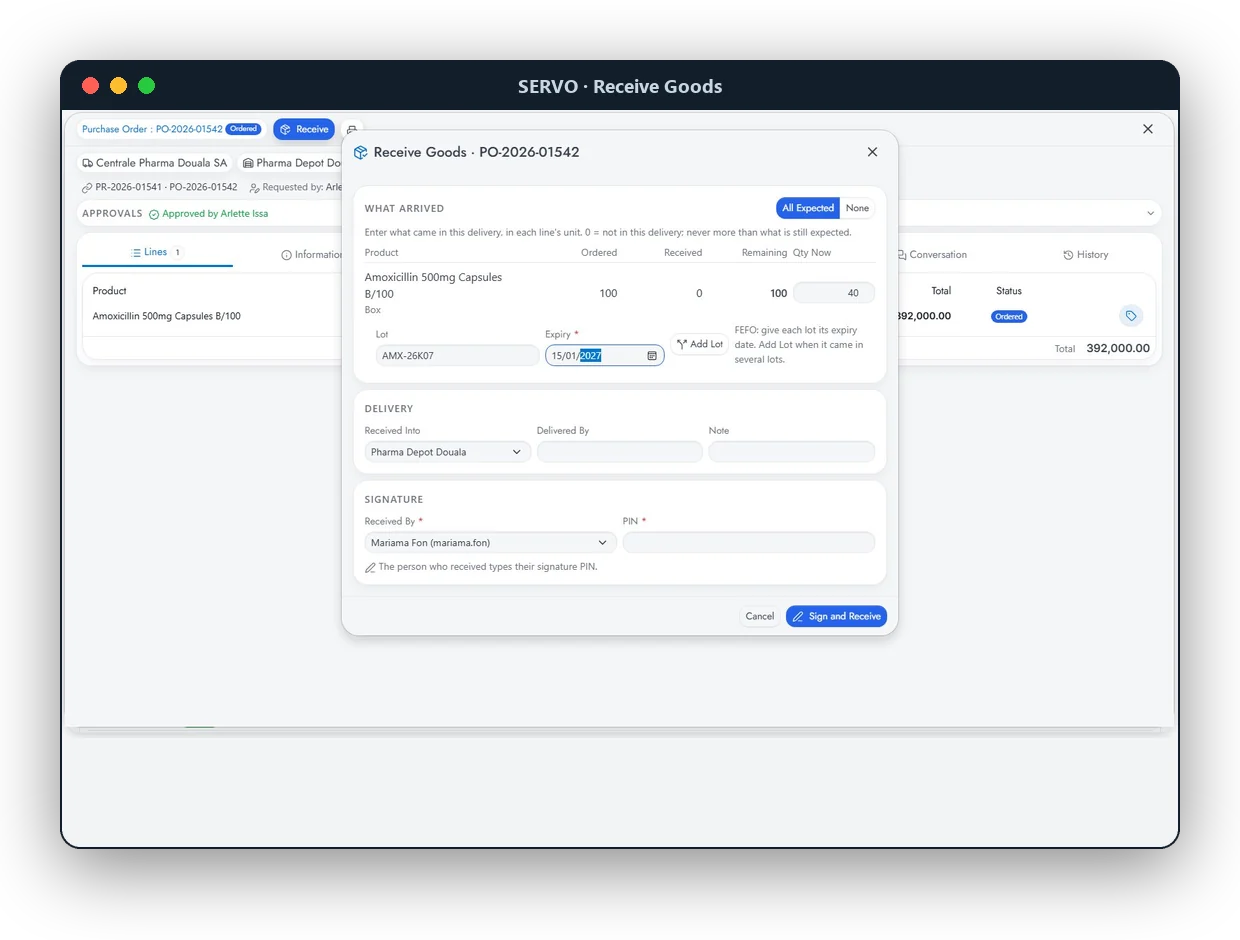
Each reception creates numbered batches with the supplier’s lot, expiry date, manufacture date and cost. One delivery can be split into several lots.
Trucks Announced Before They Arrive
A Stock Arrival tells the warehouse what is coming, which lines and which day. The counter starts from empty and types what was counted, so a short delivery is flagged against the notice.
Condition Checks at Reception
For timber, grain or cold-chain goods, the receiver records readings per lot, such as humidity, exactly as measured. Readings out of range are flagged, never adjusted.
Expiry Watched, Expired Stock Stopped
Lots close to expiry are flagged, 90 days ahead or a window set per category. Selling expired stock warns or is refused, as you decide.
A Year-End Count the Auditor Accepts
A count freezes system quantities per lot when it starts. A document dated before the count but entered after it is refused, and the count is recalculated with the late document listed.
On the Way Out
The Right Lot, Every Time
FEFO and FIFO Without a Click
For expiring goods SERVO takes the lot that expires first (FEFO); for the rest, the oldest (FIFO). The cashier picks nothing; choosing another lot needs a reason that is kept.
Quarantine, Release and Recall
A lot is Available, in Quarantine, Blocked or Recalled; new lots can arrive in Quarantine until a pharmacist releases them. A recalled lot is never sold, and its trace lists every customer who received it.
Shelf Life Your Customers Demand
Set a minimum remaining shelf life per category, and a stricter one for the hospital that wants six months or more. Picking skips lots too short for that customer.
Lot and Expiry on Every Paper
Delivery notes, invoices, 80 mm receipts, the Bon de Sortie and transfer papers print the lot and expiry under each product, so the customer leaves with the lot number in hand.
Expiry Provisions That Write Themselves
Provisions for expired and near-expiry stock are calculated per batch, approved, and released as each lot leaves. A destruction needs its certificate.
One System
Works Hand in Hand With
- Stock ManagementStock in every store and warehouse, valued, moved and counted
- Procurement, Budgets and ExpensesPurchase requests and orders for goods and services, budgets, and every expense approved and traced
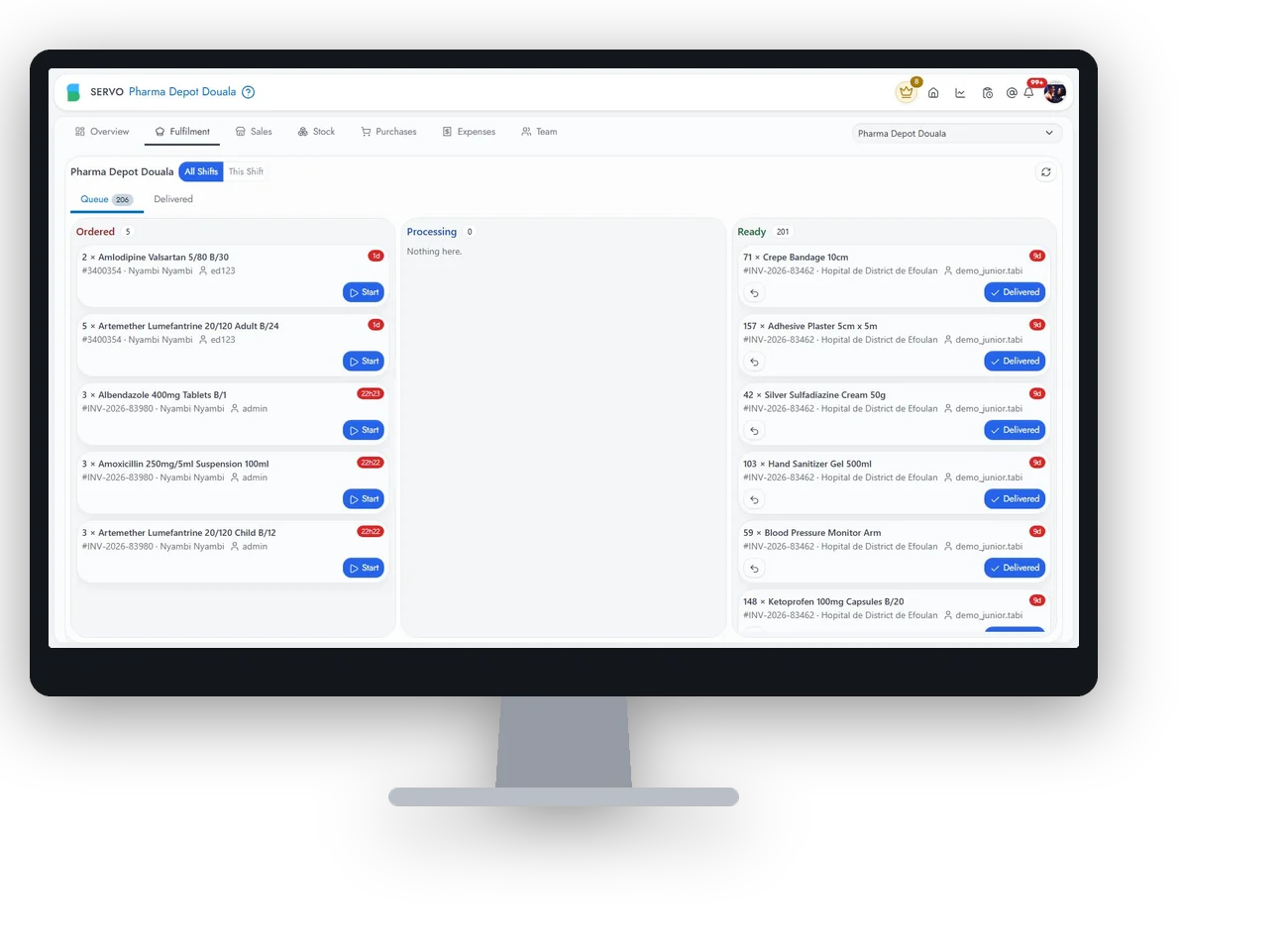
- SalesB2B sales, invoicing and payments · point of sale, cash registers and tills · customer accounts
From First Meeting to Go-Live
How We Bring It In
- We Listen and MapYour process as it really runs, on site, with the people who run it.
- We Shape SERVO to Your RulesApprovals, controls, documents and accounts set to your organisation.
- We Train Every RoleEach person on the screens they use, in French or English.
- We Stay Beside YouOn site at go-live, and a call away long after it.
Book Your Free 1-Hour Meeting
Tell us how this part of your business runs today and where you want it to go. Our consulting team will set a time that suits you.