
Solutions · Core Business
Every Sale Followed From the Order to the Books
Quotes, orders, deliveries, invoices and payments on one chain of documents, with controls at every till and the SYSCOHADA entries written as the work happens.
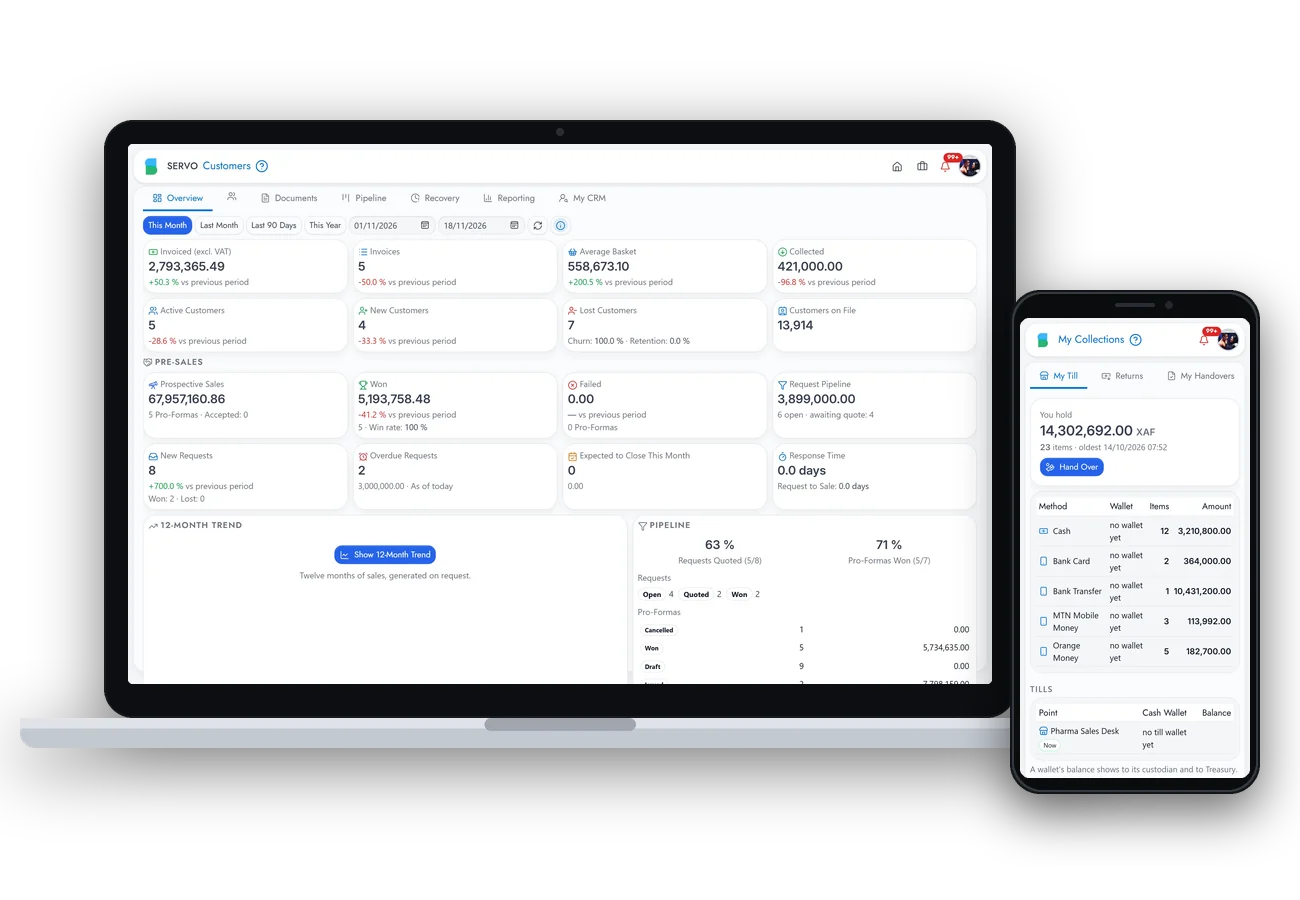
Why Sales Needs a System
Sales Is How Your Business Earns Its Living
Selling starts with a counter, a price and a receipt. Once the business is serious, orders, credit, stock, tills, salespeople and collections outgrow any notebook, and every gap between them is money slipping away.
Every Way You Sell
One System, However You Sell
The same customers, stock, prices and controls behind every kind of sale, from a quick sale at the till to a contract billed over months.
Point of Sale
Scan or pick, take cash, Mobile Money or card and print the receipt: order, invoice and payment in one step at the till.
Over the Counter
The seller writes the order, the cashier takes the money and the store hands over the goods, each under their own name.
Business to Business
Quotes, sales orders, deliveries in stages, credit terms and instalments, with your customer’s PO number on every paper.
Projects and Contracts
Large jobs sold as a project: advances and staged invoices follow the work, and the project shows what is billed and still owed.
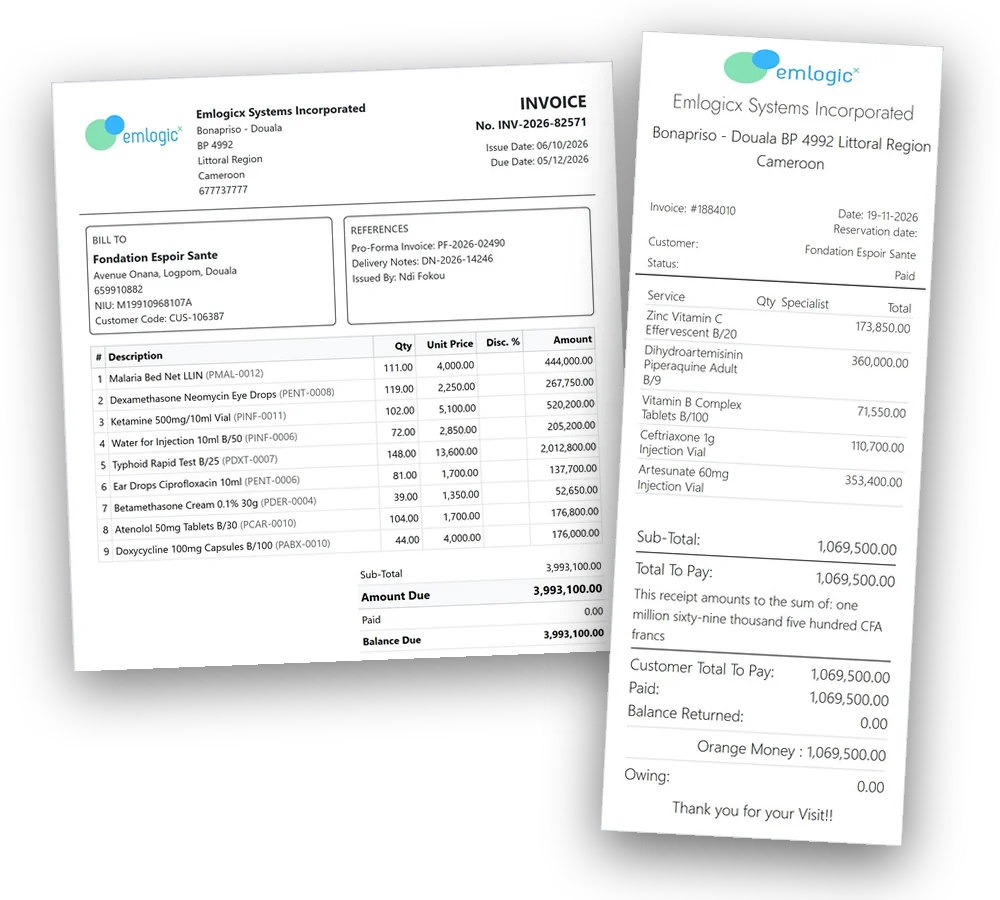
Printed for Each CustomerAn 80 mm receipt from the till’s thermal printer, or an A4 invoice, delivery note and statement for a business customer, from the same sale.
The SERVO Way
How a Sale Moves Through SERVO
Six steps, each one a numbered document with a name on it, and a control at every hand-off.
- 01QuoteSellerPrices from the customer’s own price list
- 02OrderSellerDiscounts above the seller’s ceiling wait for a manager’s PIN
- 03DeliveryStorekeeperStock leaves on a note signed by the receiver
- 04InvoiceSales OfficeNumbered without gaps, locked once issued
- 05PaymentCashierCounted once, at a named till: cash, Mobile Money or card
- 06BooksAutomaticReceivable, revenue and VAT written to SYSCOHADA accounts
At the CounterThe same chain runs in one step: order, invoice and payment at the till, with the same controls.
The Invoice Window
A Truly Advanced Sales Experience, Still Just Point and Click
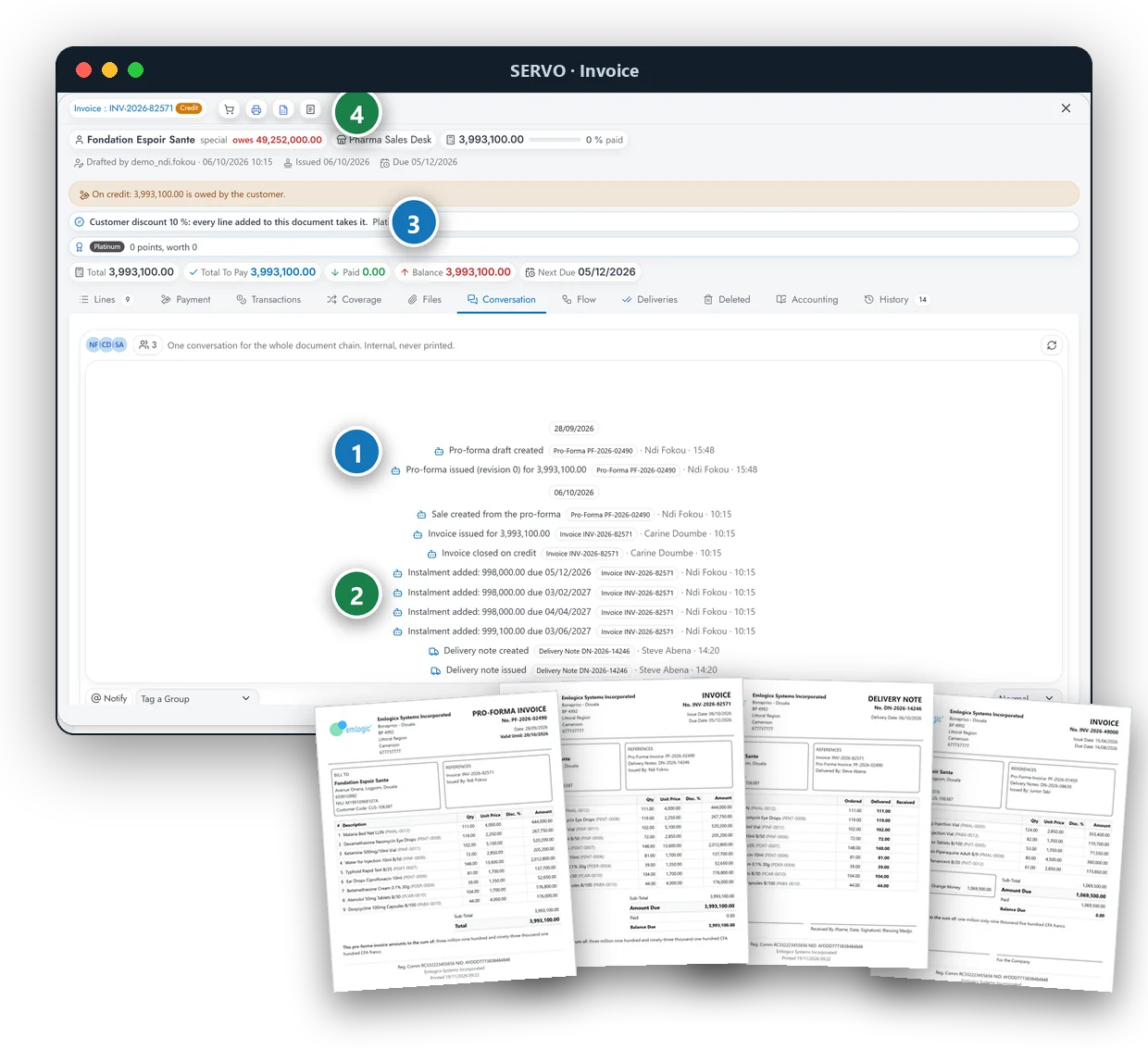
Every sale lives in one window: its conversation, its history, its instalments, its deliveries and its papers, each one click away.
Point and Click
- 1
One Conversation for the Whole Chain
From the pro-forma to the delivery note, every step and every message sits in the invoice’s own window.
- 2
Instalments That Follow Themselves Up
Split the invoice into dated instalments; the account holder is alerted before each due day.
- 3
The Customer’s Terms, Applied by Themselves
An agreed discount and the taxes set for this customer reach every line without anyone typing them.
- 4
Every Paper From the Same Window
Pro-forma, invoice, delivery note and receipt print with the amount written in words.
Process Flow
Each document is born from the one before it: the sale from the pro-forma, the delivery note from the sale. Nothing is typed twice.
The Challenge
Sales and finance directors we have worked with tell us:
“Money leaves the business in small ways we only see at month end: a discount nobody approved, a payment keyed twice, cash that stayed in a drawer. Business customers want the goods now and the invoice later, and nobody can say what was delivered, billed and still owed without asking three people.”
Where SERVO Stands Apart
The rules live in the system itself, so every till, phone and back-office screen obeys the same one.
Control at Every Till
Money Kept Where It Belongs
Discounts Approved Before They Leave
Each role has a discount ceiling, in percent and in amount. Anything above it waits for someone whose own ceiling covers it, by an alert or a PIN on the seller’s screen, and whoever gave the discount can never approve it.
A Payment Counted Once, Never Erased
A double tap on a slow line records one payment, not two, and a payment above what is owed is refused. A wrong payment is cancelled with a reason, never deleted.
One Till for Cash and Mobile Money
Cash, MTN Mobile Money, Orange Money, card and bank transfer at the same till, each method on its own account. A point of sale can require the transfer receipt on the payment before it is accepted.
Cash Traced to a Named Person
A payment belongs to the person who took it and the till of its invoice. Collectors hand cash to the treasury, the cashier confirms, and money brought back to a till gets its own receipt.
Regular Customers Rewarded Without Leakage
An agreed customer discount applies by itself on every invoice, and loyalty points are earned only on what was actually paid. Points are spent with a one-time code from the customer’s phone.
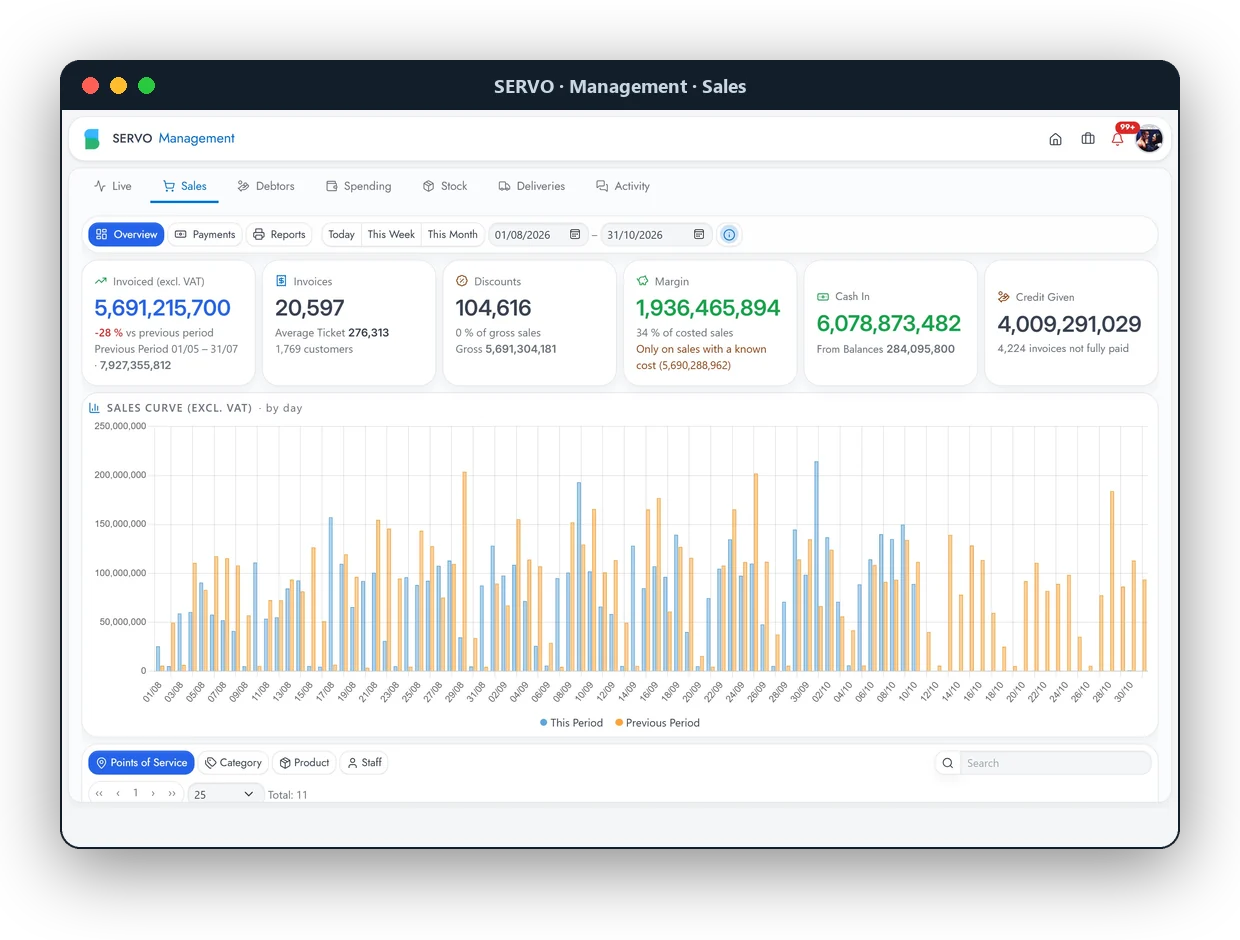
From the Order to the Books
One Chain, One Truth
Strict or Flexible Invoicing, Your Choice
Invoice numbers are given without gaps when an invoice is issued. In Strict mode an issued invoice is locked and corrected only by a credit note, as OHADA practice expects; in Flexible mode every change is a numbered revision.
Business Orders Delivered and Billed in Stages
A sales order releases stock in stages, each delivery note signed with the receiver’s PIN, and is invoiced in parts with your customer’s PO number on every document. Over-delivery is refused.
Counter, Kitchen and Workshop in Step
A line sent from the waiter’s phone or the cashier reaches the preparing department as Ordered, then Processing, then Ready. The seller is alerted when it is ready, and a line left waiting is flagged.
Instalments That Follow Themselves Up
Split an invoice into dated instalments; payments fill the earliest first, and the account holder is alerted before and on each due day. Overdue amounts reach the manager.
Journal Entries Written by the Sale
Issuing an invoice books the receivable, the revenue per line and the VAT to SYSCOHADA accounts, with nothing keyed twice. Money received before the invoice waits as a customer advance until it is used.
One System
Works Hand in Hand With
From First Meeting to Go-Live
How We Bring It In
- We Listen and MapYour process as it really runs, on site, with the people who run it.
- We Shape SERVO to Your RulesApprovals, controls, documents and accounts set to your organisation.
- We Train Every RoleEach person on the screens they use, in French or English.
- We Stay Beside YouOn site at go-live, and a call away long after it.
Book Your Free 1-Hour Meeting
Tell us how this part of your business runs today and where you want it to go. Our consulting team will set a time that suits you.